From Home to School: How Intimate Partner Violence Impairs Early Development and Academic Success
Joy from Inside Out once said, “Maybe as you grow up, you feel a little less joy.” When we’re young, we see the world as a place full of possibilities. However, as we grow, we sometimes lose that joy, and some more than others. Our environment can heavily influence our childhood experiences and the transition into adulthood. In particular, adverse events can affect our development and future outcomes.
One adverse event that commonly goes unnoticed because it occurs behind closed doors is abuse. Abuse can originate and occur between various sources, including immediate family members, extended family like grandparents, family friends, and more. Moreover, it comes in different forms, physical, sexual, emotional, verbal, financial, and neglect, all of which can profoundly affect a child’s self-esteem and sense of worth and even their educational attainment.
For starters, the first five years of a child's life are the most important for development.1 This period is also known as the critical period, and nearly 90% of brain development happens during that period.1 In this respect, this stage is when children's brains are most adaptable to learning. However, exposure to a stressful and unsafe environment, such as one characterized by violence, can disrupt this important developmental stage. Specifically, when young children witness or experience violence, they become in a state of high alert, with their bodies producing higher levels of stress hormones.2 They then enter a constant state of "fight-or-flight. Consequently, if one remains in a stressed state for long periods, it can cause delays in language skills, problem-solving abilities, and even social abilities, all of which are essential skills for success in school.3
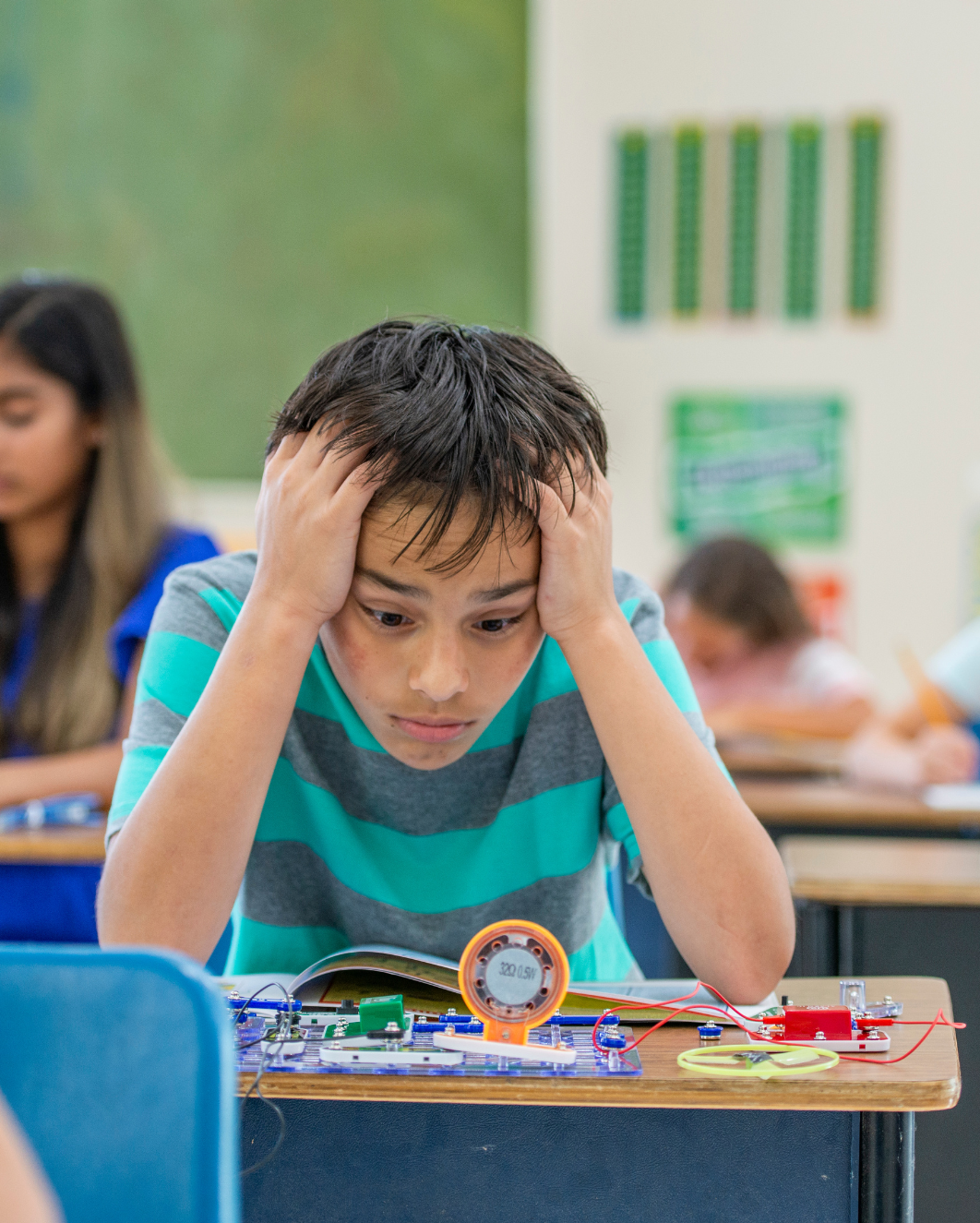
Building on the previous point, children exposed to intimate partner violence will carry the weight of their stress into school. In particular, a child's brain will become primed for always assessing potential threats.4 As a result, their brain’s resources will shift towards constant survival, making it challenging to focus, process new information, and retain what’s taught in class.4 In this respect, children eventually struggle with attention, memory, and language, causing them to eventually fall behind in school if no proper support is put in place.4
In addition to impacts on cognitive development, emotional and behavioural problems can also be another aspect. Specifically, feelings of anxiousness and anger are developed in a child from witnessing violence. This often translates into acting out, becoming disruptive, and withdrawing from class.5 Additionally, sleep issues also become a problem eventually translates into fatigue which in turn impacts focus.6
Bringing it all together, cognitive, emotional, and behavioural issues create long-term educational challenges. Children from abusive households have a higher risk of chronic absenteeism, dropping out, and experiencing academic difficulties that can limit their opportunities as adults.7 They may also have a harder time forming healthy relationships, further isolating them as they move through life, and at an increased risk of entering abusive relationships in adulthood, either as victims or perpetrators.6
Even though the impact of domestic and childhood abuse on children’s education is severe, there’s hope. In particular, schools, teachers, and communities play an important role in spotting the signs early and providing support that can make a difference. There are existing programs and support resources that work with children and non-abusive parents to help rebuild trust, heal from trauma, and develop coping strategies. These programs offer children a path to safety and overall help them establish stability.
By recognizing the impact of abuse on a child’s development, especially starting in those early years, we can give them a fair chance at reaching their potential.
1.The Science of Early Childhood Development. (n.d.). https://bipartisanpolicy.org/wp-content/uploads/2021/05/C.-1-The-Science-of-Early-Childhood.pdf
2. The effects of negative life events on Brain Development: Child and Parent Research Institute (CPRI) Attachment Consultation and Education Service (ACES) recommended resources. ontario.ca. (n.d.). https://www.ontario.ca/document/child-and-parent-research-institute-cpri-attachment-consultation-and-education-service-aces/effects-negative-life-events-brain-development#:~:text=body%2C%20and%20behaviour.-,The%20Stress%20Response,the%20child%20feel%20on%2Dedge.
3. Gilbert, A. L., Bauer, N. S., Carroll, A. E., & Downs, S. M. (2013). Child exposure to parental violence and psychological distress associated with delayed milestones. Pediatrics, 132(6), e1577-83.
4.Peterson, S. (2018, June 11). Effects. The National Child Traumatic Stress Network. https://www.nctsn.org/what-is-child-trauma/trauma-types/complex-trauma/effects
5. Team, C. (2024, July 8). How domestic violence impacts children’s learning. CDV. https://cdv.org/2023/08/how-domestic-violence-impacts-childrens-learning/
6. Effects of domestic violence on children: Office on Women’s Health. OASH | Office on Women’s Health. (n.d.). https://womenshealth.gov/relationships-and-safety/domestic-violence/effects-domestic-violence-children
7. Lee, M. (2024, April 25). Suffering in silence: How child abuse affects academic success. NCACIA Protection. https://www.ncacia.org/post/suffering-in-silence-how-child-abuse-affects-academic-success?trk=public_post-text